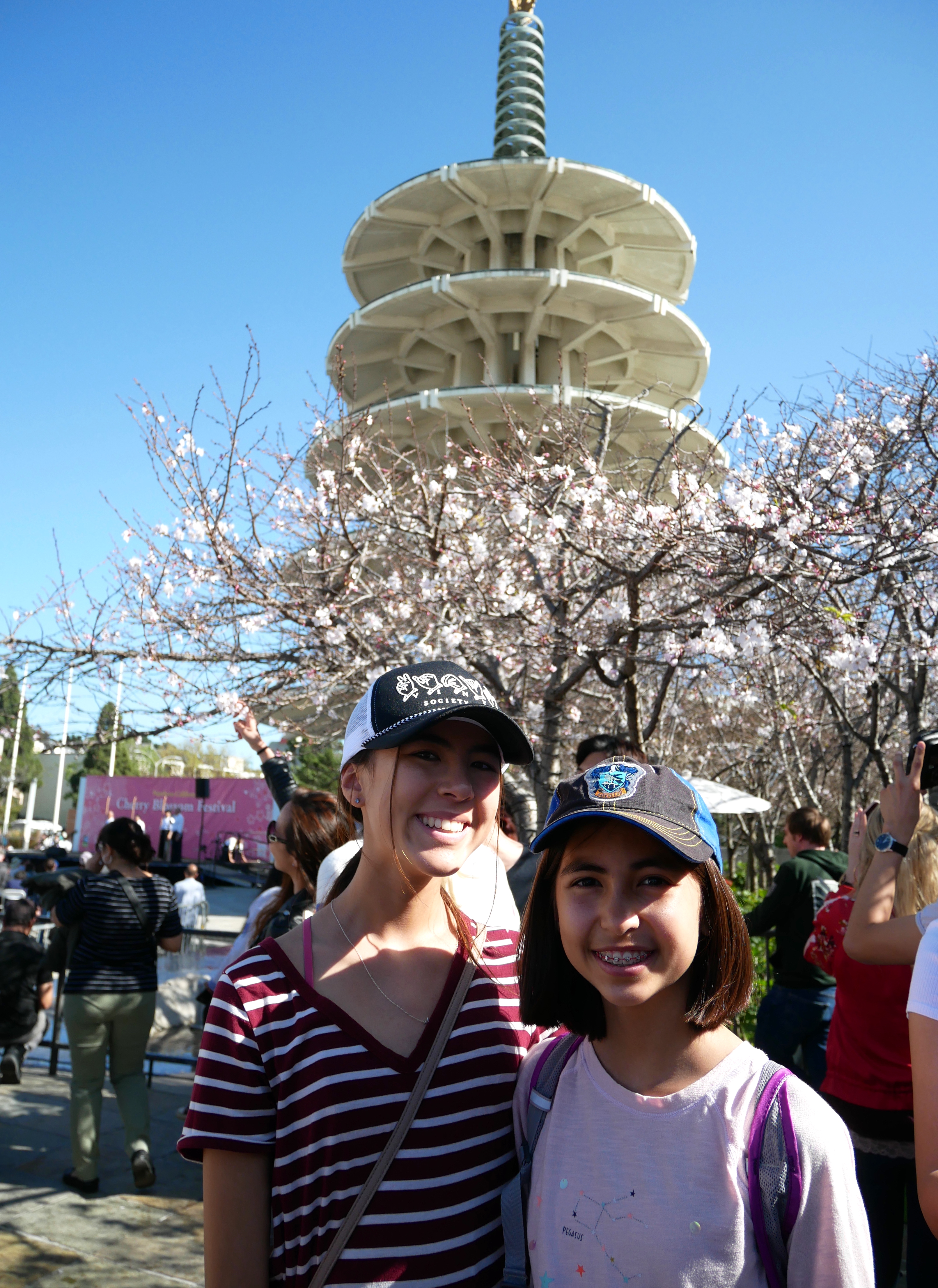
On April 14, 2018, my family and I went to Japantown in San Francisco to visit the Japanese Cherry Blossom Festival for my cultural emporium for school. A cultural emporium is basically where you have to do something out of the ordinary that exposes you to new types of cultures and religions. Turns out, Sophie also did this for her cultural emporium when she was in 6th grade, and I wrote a post about it, Japanese Cherry Blossom Festival. This festival is a celebration of nature’s ephemeral beauty, marking the brief period when cherry trees blossom. In Japantown, people honor this special occasion by displaying Japanese culture in performances, art, food, and more. We decided to go to the Japanese Cherry Blossom Festival to learn more about Japanese culture.
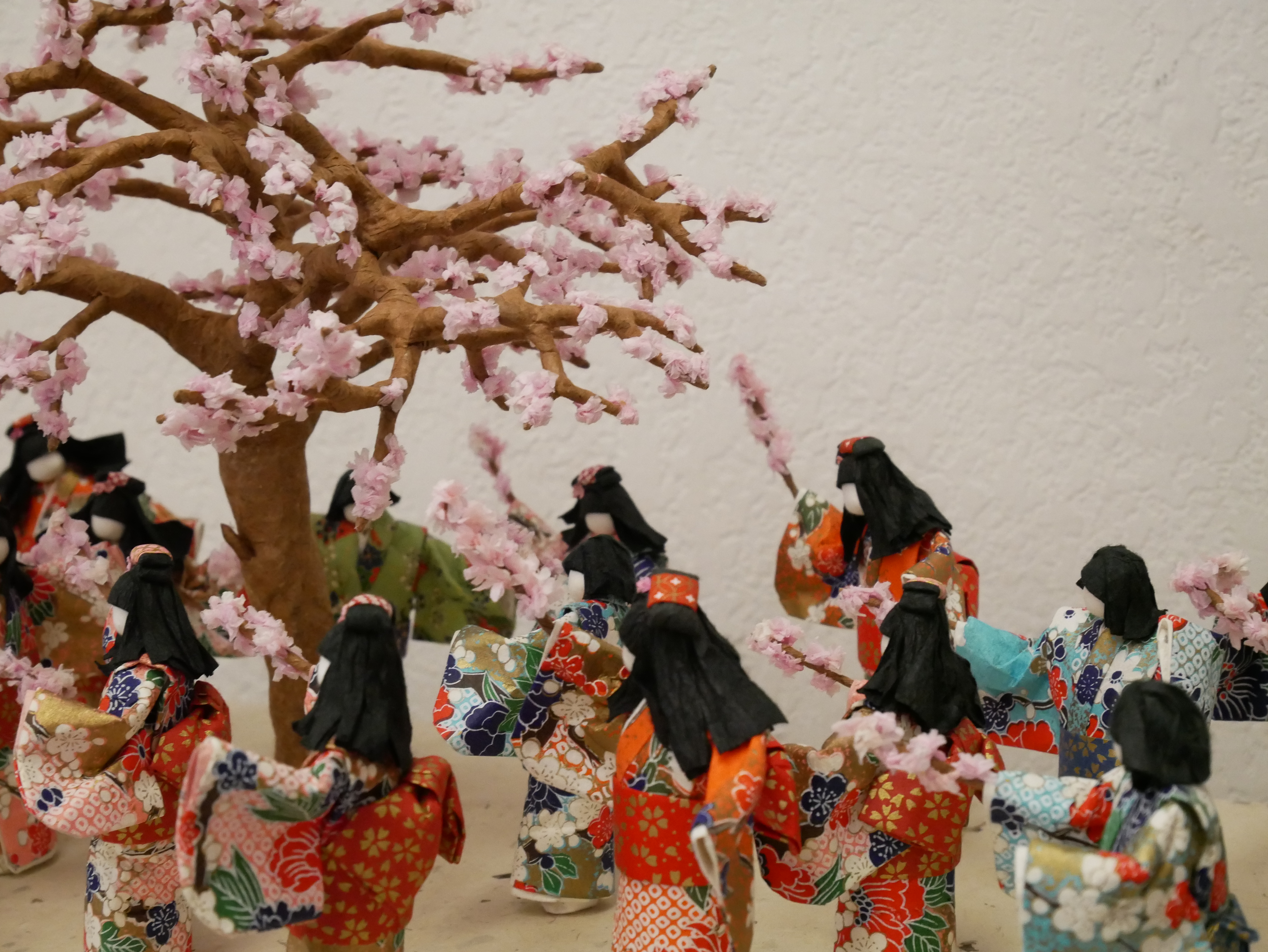
The Japanese Cherry Blossom Festival highlights Japanese culture and activities. My family and I started the day in Japantown Peace Plaza where the main events were taking place. As soon as we arrived, we immediately noticed people dancing on a stage in the middle of the plaza. They were dressed in kimonos and danced with beautiful fans. After the performance, we began walking through the crowds and the hundreds of booths spanning through the long streets of Japantown. There were a great variety of booths, each one advertising or showing something different. We then traveled up the street to another building. Inside, we visited a 3D Japanese Paper Dolls exhibit. The craftsmanship was absolutely extraordinary! Each doll was handmade from bright, colorful paper, and was folded with precision. Around the room, groups of dolls were portrayed in different scenes. One station showed a group of ladies next to a paper cherry tree, with each doll holding a blossoming branch. Another scene depicted men striking drums with tiny sticks. Each doll in the room was dressed in an intricate kimono made from paper.
One scene of paper dolls:
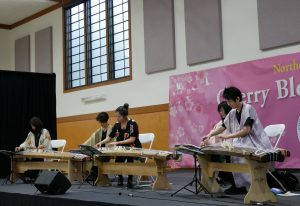
When we finished admiring the dolls, we walked to the Koto Ensemble Performance. A koto is a Japanese zither, with thirteen strings stretching across a long piece of wood. There are pegs going in a diagonal line across the middle of the piece of wood in a specific pattern to make the notes. Five ladies dressed in Japanese attire were playing the kotos. With long, fake fingernails strapped to their fingers, they plucked the strings to make a beautiful and mystical melody. One woman seemed to be the leader of the group, as she sometimes took the lead melody while the others played an accompanying tune in the background. When the ensemble finished their long piece, they stood up and bowed. My family and I enthusiastically applauded their amazing piece.
These are the ladies playing the kotos:
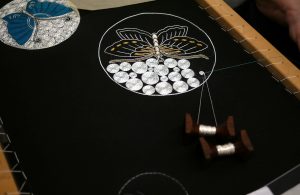
After listening to the kotos, we wandered around the rest of the building and discovered a Japanese Embroidery exhibit. When I walked in, I could immediately tell that I was going to love it. Stationed near the entrance were finished works of embroidery. Thousands of tiny stitches in different colors and patterns made a complex masterpiece. A few ladies were sitting at tables, quietly stitching on pieces of fabric held taut by blocks of wood on each side. One of them was embroidering a butterfly on a background of small, silver circles. We told her that her work was amazing. She thanked us, and in our short conversation, we discovered that each of the silver circles took around an hour to make. The lady said that to finish the work, it would take around a month. Being a crafter myself, I could fully appreciate the time and effort put into a project.
This is the piece that the lady was working on:
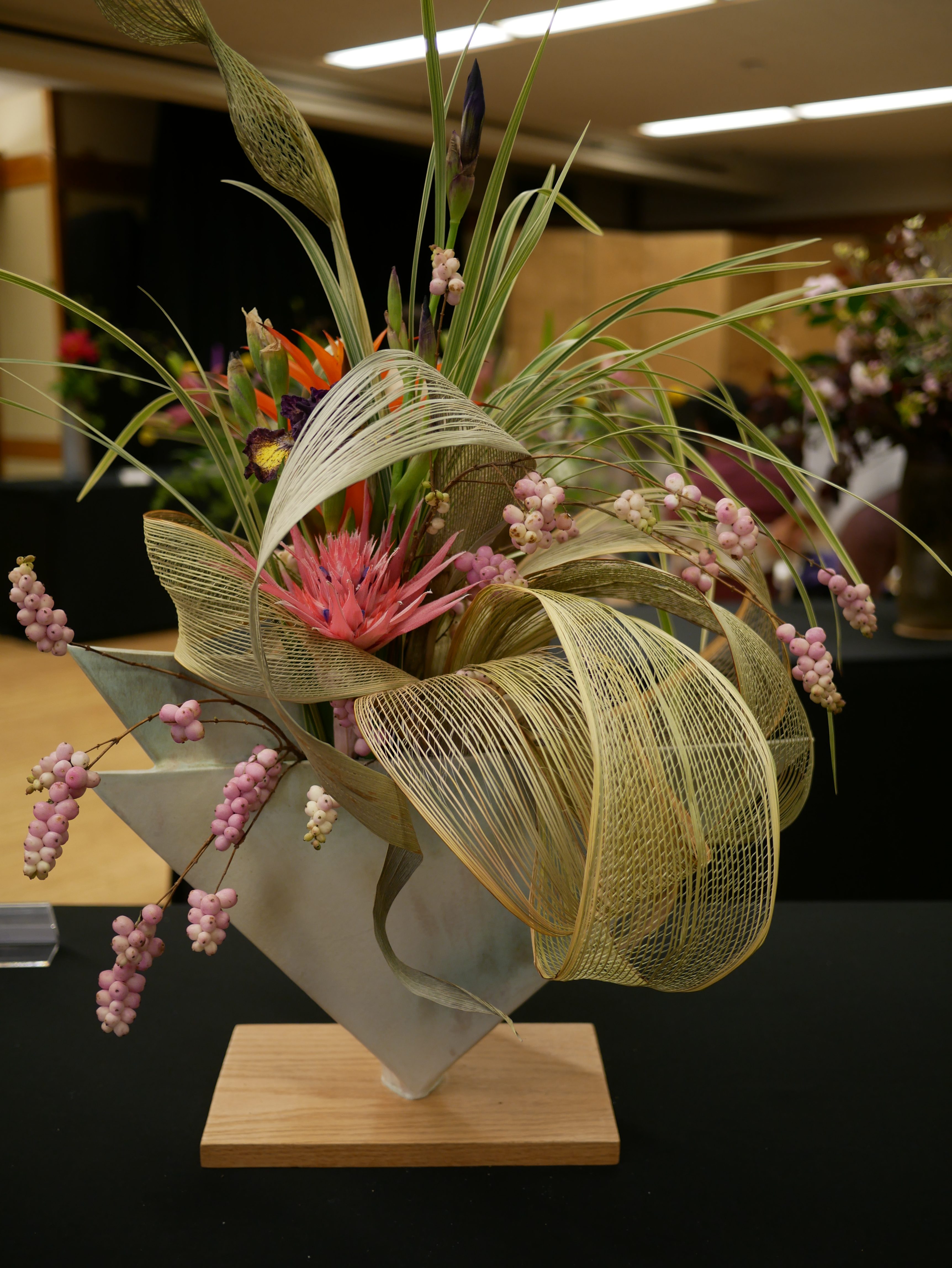
After enjoying and learning about embroidery, we moved to the Flower Arrangement exhibit, called Ikebana in Japanese. The room flourished with flowers in different sizes, colors, and shapes. Each flower arrangement had something unique about it, and all of the flowers had their own style. While observing the flowers, my mom noticed that the color and shape of a pot was specially chosen to go with a bunch of flowers. For example, one flower arrangement had dainty white flowers, bigger pink and white flowers, a green fern, and a silver strip of tinsel weaved in. The flowers sat in a silver pot, which complemented the flowers. Another flower arrangement had long green leaves and tiny pink flowers in a skinny and tall bronze vase.
This was one of the flower arrangements:
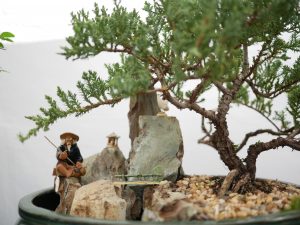
After learning about Ikebana, we returned to the street and explored some of the booths. My favorite booth was one that was selling beautiful bonsai trees. I recognized some of the types of trees, but these trees were tiny! One bonsai that I especially liked had a small, ceramic fisherman next to the tree. He was sitting on a rock holding a minuscule fishing pole. A clay bridge spanned a gap between two rocks and was painted a subtle green.
This was my favorite bonsai tree:
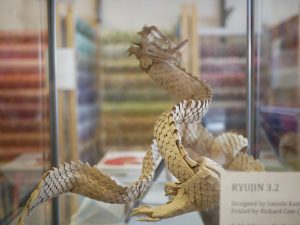
Once we had finished looking at the bonsai trees, we went to an origami exhibit in a store called Paper Tree. There was an origami dragon that caught my attention. Its scales were individually folded and had a sleek curve. Incredibly, the dragon was created from a single piece of paper.
This was the origami dragon:
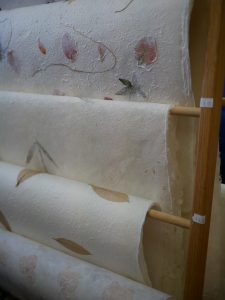
Also in the store, there was a great variety of kaleidoscopic paper, including handmade, natural paper where individual fibers were still visible.
The natural paper:
As we left the store, we noticed a man holding a gigantic, strikingly orange lizard over his head. Its enormous eyes darting around at the crowd, terrifying me. Back at the central stage, we watched a Japanese fencing demonstration, called kendo in Japanese. People dressed in metal masks and special uniforms were fighting each other using bamboo swords. Once the performance concluded, we walked to the West Mall in Japan Center. My sister and I browsed a few stores, looking in wonder at all the trinkets and trifles. Out of all the Japanese foods and desserts stationed in the mall, I finally chose to eat green tea frozen yogurt as an end to this wonderful day. Finally, after all the festivities, we went home.
While visiting the Japanese Cherry Blossom Festival, I realized how Japanese culture is unique and extraordinary. The Japanese people create fascinating art, dances, music, and so much more. I enjoyed exploring at the Cherry Blossom Festival and broadening my view of Japanese culture and traditions. Learning about Japan’s arts increased my understanding of the world’s diversity. Now I know that learning about other cultures can be an opportunity to learn something about the world, too.
Sophie and I in front of the peace tower: